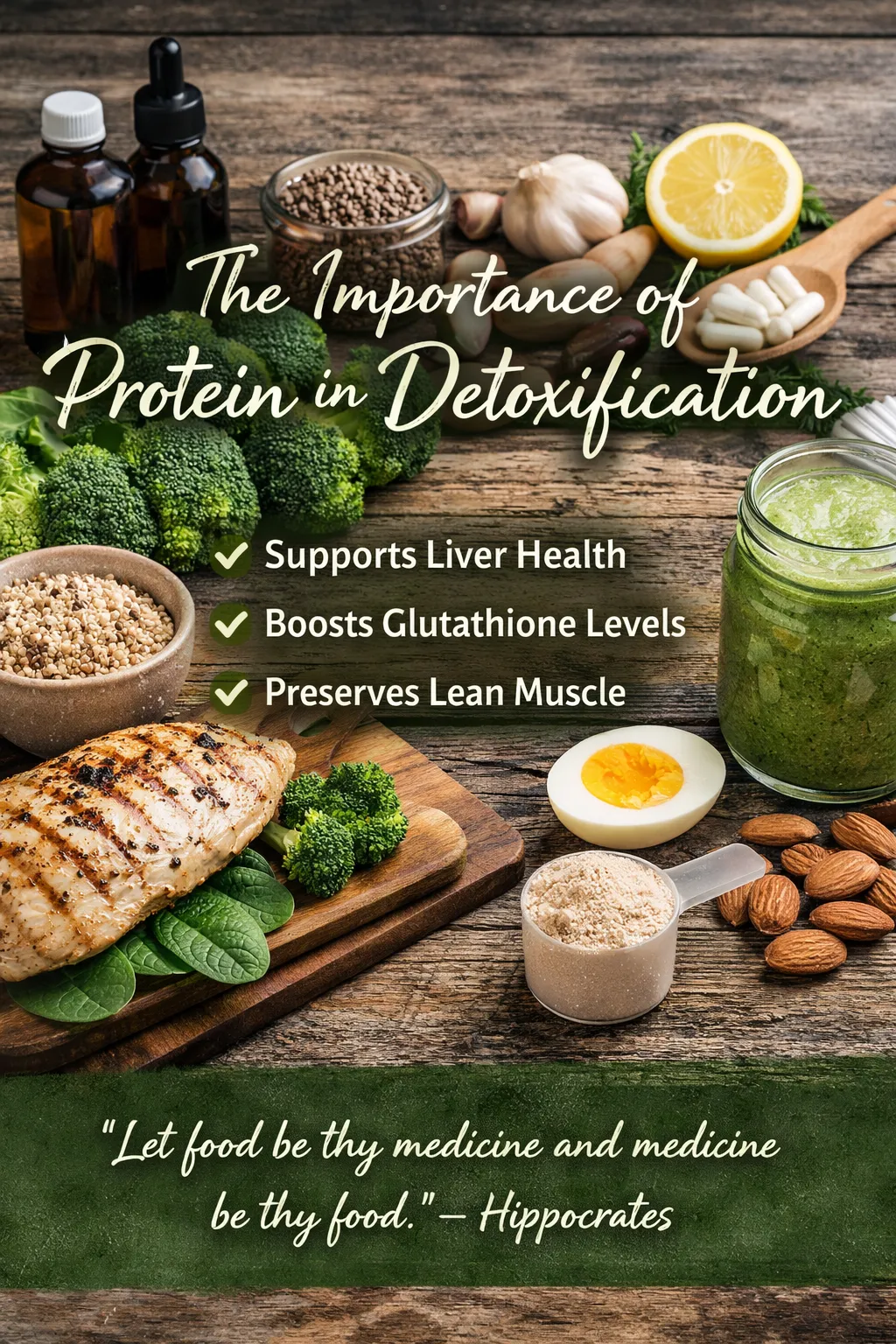
Protein for Detox
"“Blessed are you, O land, when your princes eat at a proper time—for strength and not for drunkenness.” — Ecclesiastes 10:17
Why Adequate Protein Is Essential for Any Detox Plan
Many people seek detoxification support because they feel tired, inflamed, or out of balance—and they are often drawn to plans that emphasize restriction. However, the body’s ability to detoxify is not improved by deprivation, but by proper nourishment. As a certified traditional naturopath, my approach to detox focuses on supporting the body’s natural elimination pathways through foundational nutrition. Adequate protein is a critical, and often misunderstood, component of effective detoxification, providing the essential building blocks the body needs to cleanse, repair, and restore balance.

Here’s a clear, well-structured blog you can use as-is or adapt for your site or ministry health content:
Why Adequate Protein Is Essential for Any Detox Plan
When people think about detoxing, they often picture juices, teas, fasting, or cutting out entire food groups. While reducing processed foods and supporting the body’s natural detox pathways is important, one critical element is often overlooked: adequate protein intake.
Without enough protein, a detox plan can actually slow the body’s ability to cleanse itself, weaken energy levels, and even lead to muscle loss. True detoxification is not about deprivation—it’s about supporting the systems God designed in the body to eliminate toxins efficiently.
Detox Is a Biological Process, Not a Trend
Your body detoxes every single day through organs like the liver, kidneys, intestines, lungs, and skin. The liver plays the central role, breaking down toxins so they can be safely removed.
This process happens in two main phases:
Phase I: Toxins are chemically altered.
Phase II: Those altered toxins are bound to molecules that make them water-soluble so they can be excreted.
Here’s the key: Phase II detoxification relies heavily on amino acids, the building blocks of protein. Without sufficient protein, toxins can get “stuck” halfway through the process, leading to increased oxidative stress rather than relief.
Protein Provides the Building Blocks for Detox Enzymes
Detoxification enzymes are made of protein. Amino acids such as glycine, cysteine, glutamine, taurine, and methionine are essential for liver conjugation pathways.
If protein intake is too low:
Detox enzymes are underproduced
Toxin clearance slows down
Symptoms like fatigue, brain fog, headaches, and irritability may worsen
Many people blame “detox reactions” when the real issue is protein deficiency.
Protein Protects Lean Muscle During Detox
During calorie restriction or juice-based cleanses, the body often turns to muscle tissue for fuel. Muscle loss slows metabolism, weakens the immune system, and can make recovery harder after a detox ends.
Adequate protein:
Preserves lean muscle mass
Stabilizes blood sugar
Helps maintain metabolic health
A detox that sacrifices muscle is not healing—it’s stressful.
Protein Supports Glutathione: The Master Antioxidant
Glutathione is often called the body’s “master antioxidant” and is essential for detoxification, especially in the liver. It is made from three amino acids: glutamate, cysteine, and glycine.
Low protein intake = low glutathione production.
Without enough glutathione:
Toxins are cleared more slowly
Inflammation increases
Cells are more vulnerable to damage
This is one reason people feel run-down or sick during poorly designed detox plans.
Protein Helps Regulate Blood Sugar and Cravings
Many detox plans are high in carbohydrates and very low in protein. This can lead to blood sugar swings, cravings, irritability, and fatigue.
Protein:
Slows digestion
Prevents blood sugar spikes and crashes
Reduces cravings during detox
Stable blood sugar allows the body to focus on healing rather than survival mode.
Protein Supports Gut Healing and Elimination
A major detox pathway is the digestive tract. If toxins are processed by the liver but not efficiently eliminated through the bowels, they can be reabsorbed.
Protein supports:
Intestinal lining repair
Enzyme and bile production
Regular, healthy bowel movements
A detox without proper elimination is incomplete.
What “Adequate Protein” Actually Means
Adequate protein does not mean excessive protein or processed protein powders. It means intentional, high-quality sources spaced throughout the day.
Examples include:
Wild-caught fish
Pasture-raised poultry
Grass-fed meats
Eggs
Clean plant sources when appropriate
For many adults, this means roughly 0.7–1.0 grams of protein per pound of lean body mass, adjusted for health goals and activity level.
Detox Should Be Supportive, Not Punitive
The goal of detoxification is to support the body, not punish it. Protein is not an obstacle to detox—it is one of its greatest allies.
A well-designed detox plan:
Reduces toxin exposure
Provides adequate protein
Supports liver, gut, and kidney function
Preserves strength and energy
When protein is prioritized, detox becomes safer, more effective, and far more sustainable.
True detox isn’t about eating less—it’s about nourishing wisely.
Other resources to help you get started
Ready to support your body’s natural detoxification process? I’ve curated a selection of high-quality supplements that align with the principles shared in this article and are designed to support liver function, antioxidant balance, and overall metabolic health. Explore these resources in my online shop to get started. Shop the bundle here.

